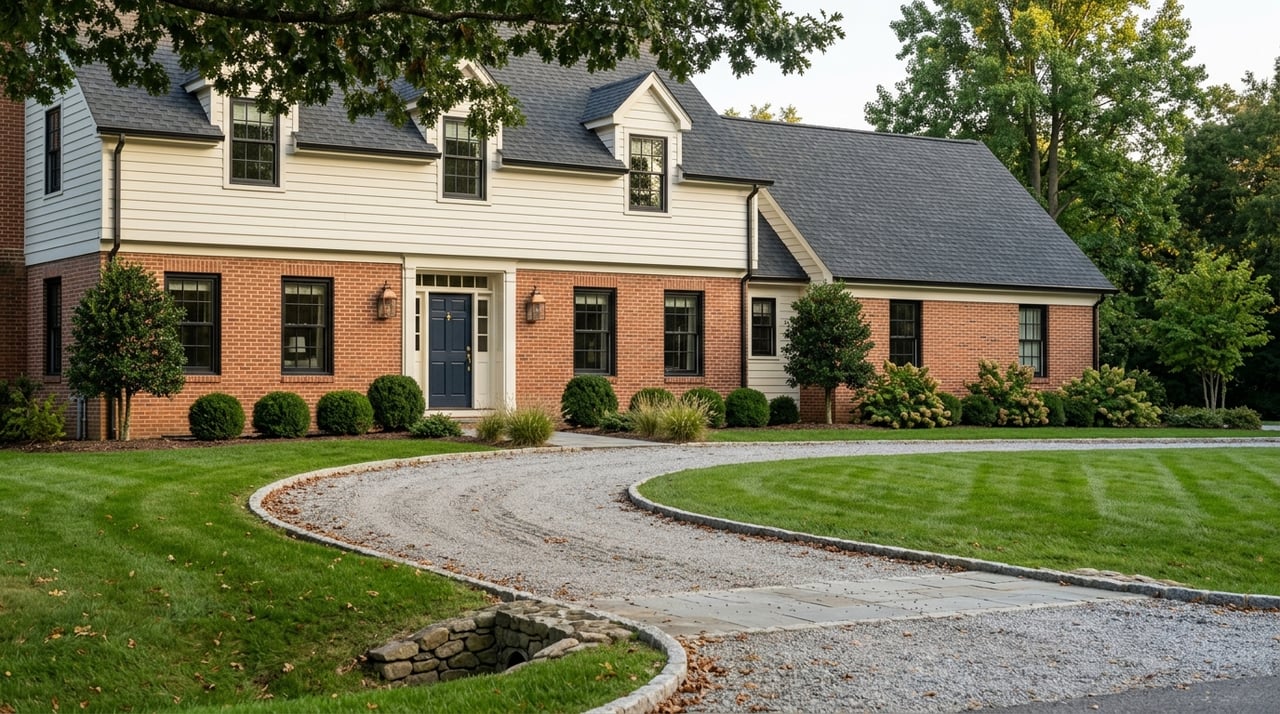
If you are drawn to acreage in Great Falls, you are probably looking for more than a bigger yard. You may want privacy, mature trees, space between homes, and a setting that feels quieter and more tucked away. The tradeoff is that larger properties often come with more systems to manage, more county rules to understand, and more upkeep than many buyers expect. This guide walks you through the biggest considerations so you can evaluate acreage in Great Falls with more clarity and confidence. Let’s dive in.
Great Falls Acreage Works Differently
Great Falls is not simply a suburb with oversized lots. In Fairfax County’s Upper Potomac planning area, Great Falls is described in part as semi-rural and characterized by estates, farms, and large-lot subdivisions. In the Springvale sector, the county notes that much of the committed and anticipated development is on two-acre and five-acre residential sites, with an emphasis on preserving a very low-density, open-space residential character, according to the Fairfax County Comprehensive Plan.
For you as a buyer or owner, that means the appeal of acreage often comes from the overall experience of the property. Privacy, tree cover, and separation from neighbors can matter just as much as the lot size itself. In many cases, that lifestyle value is what drives demand more than the idea of future expansion.
Lot Size Is Not the Whole Story
A larger parcel does not automatically mean more flexibility. Fairfax County’s zoning FAQs state that, in general, a property is limited to no more than one dwelling unit per lot regardless of lot size, though some exceptions may apply, such as approved accessory living units.
That is an important point if you are assuming acreage creates easy options for adding another home or subdividing later. In Great Falls, the land may be generous, but county rules still shape what is realistic. Before you buy, it helps to think about the property as a long-term lifestyle asset first and a development opportunity second.
Shape and Buildability Matter
On acreage, lot shape can affect day-to-day ownership more than many buyers realize. Fairfax County adopted shape-factor rules in the Residential-Conservation district because irregular lots can make property lines harder to interpret and complicate setbacks, fences, sheds, yard use, and septic maintenance, as explained in the county’s summary of geometric regularity rules for housing lots.
In practical terms, two lots with the same acreage may function very differently. A more regular shape can be easier to maintain and easier to understand. A heavily irregular parcel may create more questions about where you can place improvements and how usable the land really is.
Utilities Need a Closer Look
When you own acreage, utility questions often become more important. On a typical suburban lot, you may rarely think about where water comes from or how wastewater is handled. On a large parcel in Great Falls, those details can directly affect cost, maintenance, and resale appeal.
Private Wells Require Ongoing Attention
Fairfax County says private well owners are responsible for their own systems. The county recommends annual testing for bacteriological and chemical contaminants, along with checks for mechanical issues and treatment-system performance, as outlined on its sewage and water guidance page.
If a property relies on a private well, you should factor in that ongoing responsibility from the start. A properly installed well can serve a home well, but it is not a set-it-and-forget-it system. Regular testing and maintenance are part of the ownership picture.
Septic Systems Have Set Rules
If a home is not on public sewer, onsite sewage requirements matter. Fairfax County states that septic tanks for systems that do not require a VPDES permit must be pumped at least once every five years. Alternative onsite sewage systems also carry annual inspection and five-year sampling requirements under the county’s health department requirements.
For acreage owners, this means you should understand not just whether a property has septic, but also what kind of system is in place and what the maintenance schedule looks like. That knowledge can help you budget more accurately and avoid surprises after closing.
Public Sewer Is Not Guaranteed
Many buyers assume sewer access is available if they are in a high-value market. In Fairfax County, that is not always the case. The county says a home must be located in an approved sewer service area, public sewer must be available, and for single-family homes the sewer main generally needs to be within 300 feet of the building to connect, according to the county’s page on connecting to the public wastewater system.
If service has to be extended, the requesting owner generally pays for it. That can become a major cost consideration, especially on larger parcels. It is wise to confirm sewer status early rather than assume a future connection will be simple.
Land Use Rules Can Affect Ownership
Acreage often gives you more room, but not always fewer limits. In Great Falls, environmental features, private restrictions, and permitting rules can all shape what you can do with the land.
Tree Removal May Need Approval
Fairfax County says removing individual trees on private property is generally allowed, but land-disturbing activity over 2,500 square feet requires a county permit. The county also states that clearing within a Resource Protection Area may require approval or a waiver, and conservation easements can add further limits, based on the county’s tree removal guidance.
This matters if you are planning to clear space, improve views, install outdoor features, or make major changes to the grounds. On acreage, even routine-looking work can cross a permitting threshold more quickly than expected.
Resource Protection Areas Can Change Your Plans
Great Falls properties may include or border streams, ponds, wetlands, or other water-related features. Fairfax County identifies Resource Protection Areas, or RPAs, as environmentally sensitive corridors where development and clearing restrictions may apply, as explained on the county’s RPA designation page.
An RPA does not necessarily make a property undesirable. It does mean you should understand how much of the lot is truly usable and what improvements may be restricted. That can affect everything from landscaping plans to future additions.
Private Covenants May Add Another Layer
County approval is not the only standard that matters. Fairfax County notes that private covenants and deed restrictions are not enforced by the county, but they may impose their own limits on items such as fences, vegetation, or other changes, according to the same sewage and water guidance.
If the property is in an HOA or governed by deed restrictions, review those documents carefully. They may shape what you can change, even when the county would otherwise allow it.
Maintenance Costs Are Usually Higher
One of the biggest realities of acreage ownership is simple: more land usually means more work. Even if the home itself is move-in ready, the site can still demand steady attention throughout the year.
Driveways and Roads Add Responsibility
Fairfax County explains that VDOT maintains virtually all public roads in the county, while private roads are commonly maintained by HOAs or residents themselves, according to its page on road conditions and maintenance.
For acreage owners, that can translate into practical costs. Long driveways and private lanes may require snow removal, drainage management, pothole repair, and resurfacing over time. Those costs may not appear obvious during a first showing, but they can become a meaningful part of annual ownership.
Stormwater Systems May Be Yours to Manage
On some large properties, stormwater infrastructure is privately maintained. Fairfax County says privately maintained stormwater facilities are the owner’s responsibility and are inspected at least once every five years, as noted in its RPA and land development guidance.
This is one more reason to look beyond square footage and finishes when evaluating acreage. Drainage patterns, water movement, and site infrastructure can affect both maintenance demands and long-term property performance.
Wildlife Can Affect Landscaping
A wooded setting is a major draw in Great Falls, but it can also bring regular wildlife pressure. Fairfax County says white-tailed deer damage to landscaping and ornamental plants is widespread across the county, and fencing or other barriers may be needed to help reduce that damage, according to the county’s guidance on deterring deer on your property.
If you enjoy gardening or are budgeting for landscape upgrades, it helps to account for protective measures from the beginning. A beautiful setting can still require a practical plan.
Acreage and Resale Value
Great Falls remains a high-end housing market. Realtor.com reported a median home sale price of about $2.47 million in February 2026, with 67 homes for sale and a balanced-market reading. For ZIP code 22066, Realtor.com reported a median home price of $2.45 million and 62 homes for sale on its Great Falls market overview.
Even in a strong market, acreage does not create value on its own. Buyers often look closely at how usable the land is, how manageable the systems are, and how many limitations come with the site.
What Buyers Tend to Value Most
In practice, properties may be easier to maintain and easier to market when the lot lines are straightforward, the site has manageable drainage, and there are fewer utility or environmental constraints. That conclusion is consistent with the county’s zoning, utility, and land-use rules.
For resale, the most appealing acreage properties are often the ones that balance privacy with practicality. Large parcels can be highly attractive, but buyers still want clarity around maintenance, utility systems, and what they can realistically do with the land.
Smart Questions to Ask Before You Buy
If you are considering acreage in Great Falls, these questions can help you evaluate a property more carefully:
- Is the property served by public sewer, septic, or another approved system?
- If there is a private well, when was it last tested and serviced?
- Are there Resource Protection Areas, wetlands, easements, or conservation restrictions on the lot?
- Is any planned clearing or grading likely to trigger permits?
- Who maintains the road or driveway access?
- Are there HOA rules, deed restrictions, or private covenants that affect use of the land?
- How regular is the lot shape, and are the property lines easy to understand?
- What level of ongoing landscaping and infrastructure maintenance should you expect?
These are the kinds of details that can make ownership feel either straightforward or unexpectedly complex. The earlier you verify them, the better prepared you will be.
Owning acreage in Great Falls can be rewarding if you want privacy, a more natural setting, and room to spread out. It can also require a more careful review of utilities, maintenance obligations, access, and land-use rules than a standard suburban purchase. If you want help evaluating a property, understanding tradeoffs, or planning your next move in the DMV suburbs, Teresa Burton offers thoughtful, responsive guidance grounded in local market experience.
FAQs
What makes acreage ownership in Great Falls different from a typical suburban lot?
- Great Falls acreage is often valued for privacy, tree cover, and a low-density setting, but it may also involve more utility, maintenance, and land-use considerations than a standard suburban property.
Does a larger lot in Great Falls mean you can build more than one home?
- Not usually. Fairfax County says that in general a property is limited to no more than one dwelling unit per lot, although some exceptions such as approved accessory living units may apply.
What should you check about well and septic systems on a Great Falls property?
- You should confirm whether the home uses a private well or septic system, review maintenance records, and understand county requirements for annual well testing and septic pumping or inspections.
Can environmental features limit how you use acreage in Great Falls?
- Yes. Streams, wetlands, ponds, and similar features may place part of the property in a Resource Protection Area, which can restrict clearing and development.
Are maintenance costs usually higher on acreage in Great Falls?
- In many cases, yes. Larger properties may involve more landscaping, driveway upkeep, drainage work, stormwater maintenance, and wildlife-related landscape protection.